What Can French Bulldogs Eat? Safe Foods and Feeding Basics
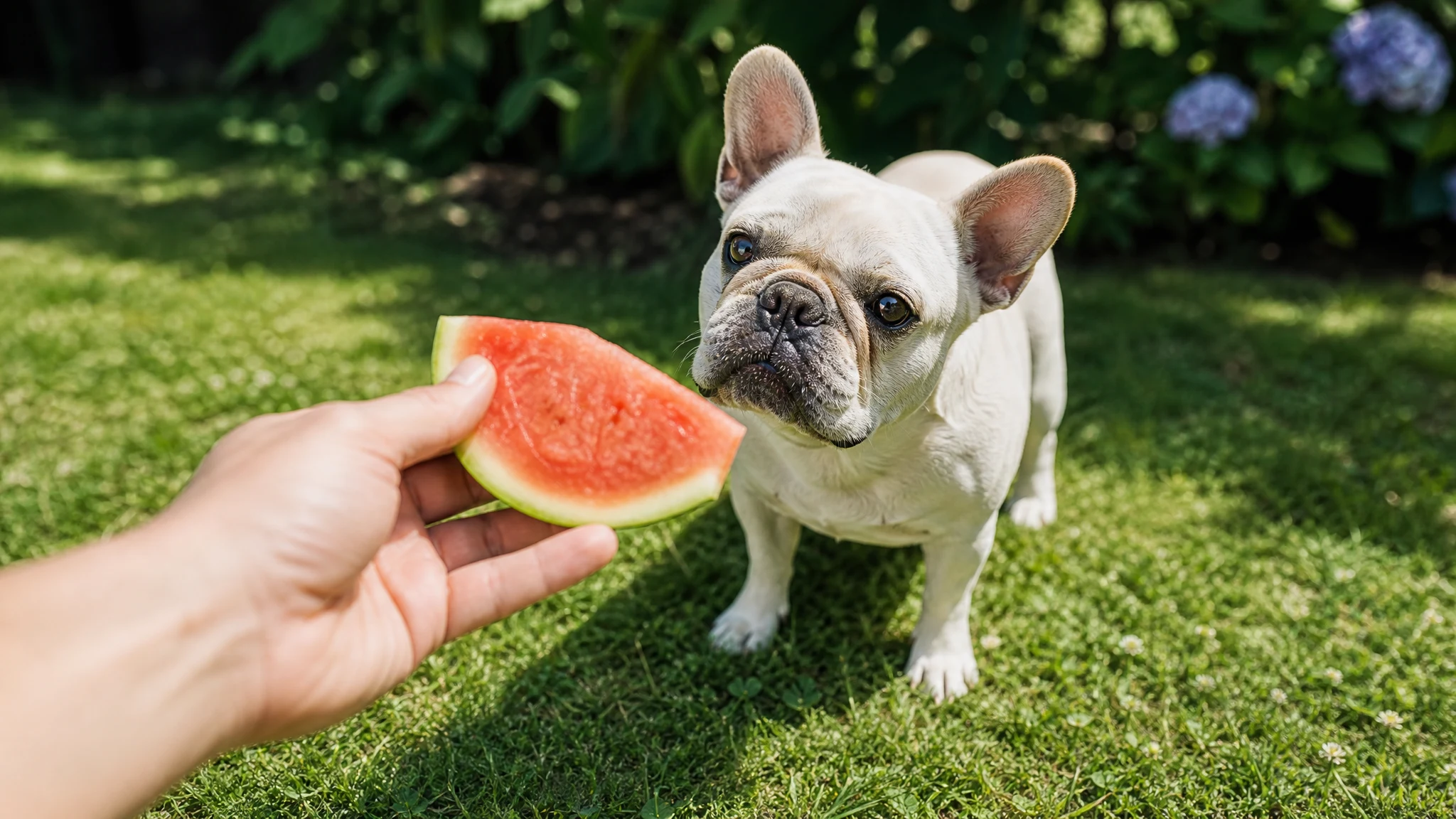
General nutrition information compiled from product labels and published sources, not veterinary advice. Your veterinarian is the right person to choose a diet for your dog, especially one with a health condition.
The question of what can french bulldogs eat has a short answer and a longer one. The short answer is a complete and balanced dog food that fits your dog's life stage, in measured portions. The longer answer is a process: check the label, pick a food, set a starting amount, and adjust with your veterinarian.
This guide walks through that process. It compares label data only. We did not run feeding trials or taste tests, and nothing here replaces advice from your veterinarian about your individual dog.
Why feeding a French Bulldog needs extra care
The American Kennel Club (AKC) breed page describes the French Bulldog as under 28 pounds and 11 to 13 inches tall, with a life expectancy of 10 to 12 years. The same page says Frenchies are prone to obesity and that owners should watch calorie intake and weight.
Weight also matters for breathing. Cornell University's Riney Canine Health Center lists maintaining a healthy weight among the conservative management steps for brachycephalic obstructive airway syndrome (BOAS), which affects short-muzzled breeds. That does not mean any food prevents or treats BOAS. It means portion control is a sensible habit for this breed, and your veterinarian decides what is right for your dog.
For a deeper look at the factors behind these choices, see French Bulldog nutrition and the diet factors that matter.
What you need before you start
- Your dog's current weight from a recent vet visit or a home scale
- Your dog's age, so you know whether a puppy, adult or senior food applies
- A level measuring cup, or better, a kitchen scale that reads in grams
- The bag or can of any food you are considering, so you can read the label
- A notepad or phone note to record portions, treats and weight checks
- The name and number of your veterinarian for questions about health conditions
Step 1: Start with a complete and balanced food
The base of any Frenchie's diet should be a food whose label says it is complete and balanced. Look for an AAFCO statement. It will say the food either meets the AAFCO Dog Food Nutrient Profiles or passed animal feeding tests, and it will name a life stage such as growth, maintenance or all life stages.
If the label does not carry that statement, it is not a good candidate for a main meal. Home mixes, toppers and snacks are extras, not a substitute for a complete food.
Step 2: Match the food to your dog's life stage
Puppies, adults and seniors use different formulas. Royal Canin's French Bulldog Puppy Dry Dog Food is intended for purebred French Bulldogs from 8 weeks to 12 months. Its adult formula is intended from 12 months. That is the manufacturer's guidance, so ask your veterinarian when to switch your own dog.
One label detail can confuse owners. Royal Canin's puppy formula states it meets AAFCO growth levels "including growth of large size dogs (70 lb. or more as an adult)." Under the AAFCO model wording, as written in Kentucky's 12 KAR 3:039 rule, a growth or all-life-stages food must carry either that phrase or the phrase "except for growth of large size dogs." The wording describes how the food is formulated. It is not a size recommendation, and a Frenchie under 28 pounds is not a large breed.
Step 3: Read the rest of the label
Once the AAFCO statement checks out, compare the other label data. Marketing on the front of the bag tells you little. The back panel tells you more.
- Ingredient list. Ingredients are listed by weight. Read the first five, but remember that no single ingredient tells the whole story.
- Guaranteed analysis. This gives minimum protein and fat and maximum fiber. Some brands, such as Hill's, publish average dry-matter values instead, so compare like with like.
- Calories per cup. This is the number that matters most for portioning a breed prone to weight gain.
- Kibble shape and size. This is a practical point, not a nutritional one.
Step 4: Compare a few label examples
The table below shows label data for foods from three brands. It is a comparison of printed information, not a ranking or recommendation.
| Food | Life stage | First ingredients | Calories |
|---|---|---|---|
| Royal Canin French Bulldog Adult (dry) | Adult, 12 months and older; AAFCO maintenance | Brewers rice, wheat, chicken by-product meal, chicken fat, wheat gluten | 331 kcal ME per cup |
| Royal Canin French Bulldog Puppy (dry) | Puppy, 8 weeks to 12 months; AAFCO growth | Brewers rice, chicken by-product meal, wheat, chicken fat, chicken meal | 373 kcal ME per cup |
| Hill's Science Diet Adult Small & Mini Chicken & Brown Rice (dry) | Adults 1 to 6 years, up to 25 lb when full grown; AAFCO feeding tests | Chicken, brown rice, whole grain wheat, whole grain corn, brewers rice | 357 kcal per cup |
| JustFoodForDogs Chicken & Rice (fresh frozen) | All life stages, including large-size growth | Chicken, long-grain white rice, long-grain brown rice, carrots, kale | 43 kcal ME per oz |
A few notes on reading it. Royal Canin states that its adult kibble is curved to suit the short muzzle and underbite of a French Bulldog. Hill's Small & Mini formulas are labeled for dogs up to 25 pounds, while the AKC describes the breed as under 28 pounds, so a dog at 26 to 28 pounds sits just above that label range. Hill's publishes dry-matter averages rather than guaranteed minimums, so its protein and fat figures are not directly comparable with a guaranteed analysis. For any brand, check the product page for current label data, since formulas change.
Step 5: Set a starting portion
Feeding charts are starting points, not prescriptions. They are written for an average dog of a given weight, and your Frenchie may need more or less.
Some examples from the brands themselves:
- Royal Canin's adult dry formula lists 1 1/4 cups (111 g) per day for an 18 lb dog with low activity, 1 1/2 cups for medium activity and 1 3/4 cups for high activity.
- Royal Canin's puppy formula lists 1 1/4 cups (122 g) per day at 2 months for a puppy with a target adult weight of 18 lb.
- Hill's lists 1 2/3 cups (160 g) per day for a 20 lb dog and 2 cups (190 g) for a 25 lb dog on its Adult Small & Mini dry food.
Weigh the food if you can. Scoops vary a lot from person to person, and with a breed that gains weight easily, small errors add up. Split the daily amount into meals as your veterinarian suggests.
Step 6: Count treats and extras
Treats, chews, chopped add-ins and table scraps all contain calories. Count them as part of the daily total and reduce meals slightly to compensate.
Whether a particular human food is safe for your dog is a question for your veterinarian. Do not rely on an internet list, and do not assume that a food safe for people is safe for dogs. When in doubt, skip it.
Step 7: Introduce changes gradually
When you switch foods, mix a little of the new food into the old and increase the share over about a week or more, unless your veterinarian says otherwise. A sudden change can upset a dog's stomach. If you see vomiting, diarrhea or a loss of appetite, contact your veterinarian.
Step 8: Check weight and adjust
Weigh your dog every few weeks and record it. Check body shape too: you should be able to feel the ribs without pressing hard. If weight is creeping up or down, adjust portions in small steps and talk to your veterinarian. This matters because the AKC flags obesity as a breed concern.
Tips and common mistakes
- Treating the feeding chart as a rule. It is a starting point. Activity, age and metabolism change the real need.
- Forgetting treats. Many owners count meals but not snacks.
- Choosing by marketing. Words like "premium" or "natural" are not nutrition data. Read the AAFCO statement and the calories.
- Assuming grain-free is better. The U.S. FDA's investigation into diets and dilated cardiomyopathy (DCM) found reports involving both grain-free and grain-containing diets. FDA also says adverse event report counts alone do not establish a causal relationship, and that it has not requested recalls. It had received 1,382 DCM reports from January 1, 2014 to November 1, 2022. Because the science is unsettled, ask your veterinarian about heart health and diet.
- Expecting a food to fix a health problem. The AKC lists skin allergies among the conditions seen in the breed, but it does not say they are food-related. Only a veterinarian can say whether a diet change makes sense, and prescription diets come only from a veterinarian.
- Switching foods too fast. Gradual changes are easier on the stomach.
- Using a puppy food too long. Puppy formulas are usually higher in calories. Ask your veterinarian when to move to an adult food.
What to expect
If you choose a complete and balanced food, measure it, and count treats, you can reasonably expect a steadier body weight and easier day-to-day feeding. Results vary by dog. No food can promise a particular health outcome, and weight, coat, stool and energy are things to watch and report to your veterinarian rather than proof that a food is working.
Your veterinarian is the right person to decide on any special diet, supplement, or change tied to a condition such as BOAS, skin problems or joint concerns. Bring your notes on portions and weight to the appointment.
Sources
- American Kennel Club, French Bulldog breed page
- Cornell University College of Veterinary Medicine, Riney Canine Health Center: Brachycephalic Obstructive Airway Syndrome (BOAS)
- U.S. FDA: Investigation into Potential Link between Certain Diets and Canine Dilated Cardiomyopathy
- U.S. FDA: Questions and Answers on Non-Hereditary DCM in Dogs
- Kentucky Agricultural Experiment Station, 12 KAR 3:039, Nutritional adequacy
- Royal Canin: French Bulldog Adult Dry Dog Food
- Royal Canin: French Bulldog Puppy Dry Dog Food
- Hill's Pet: Science Diet Adult Small & Mini Chicken & Brown Rice
- JustFoodForDogs: Chicken & Rice Recipe