Best Dog Food for French Bulldogs With Gas: What to Look for on the Label
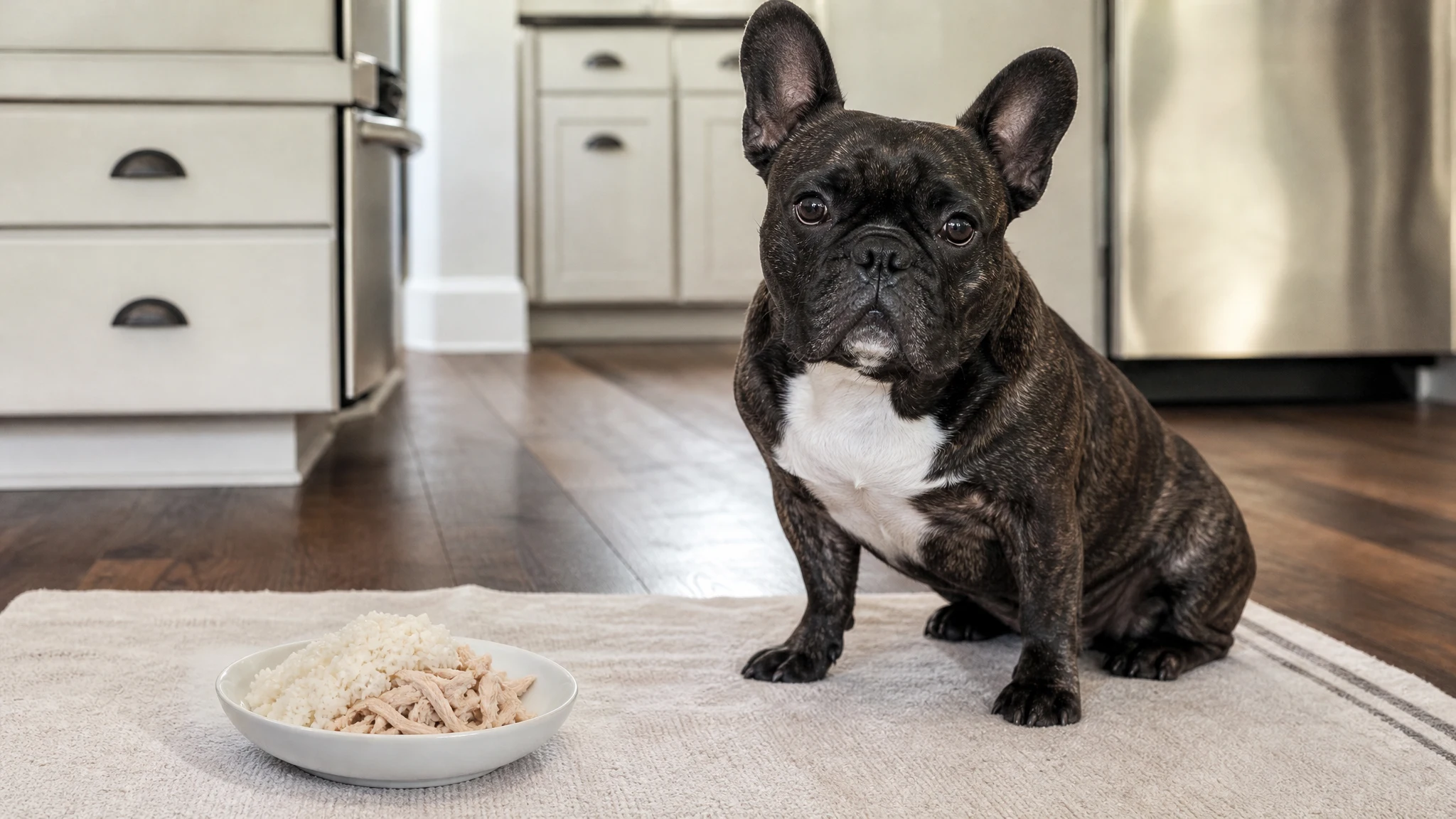
General nutrition information compiled from product labels and published sources, not veterinary advice. Your veterinarian is the right person to choose a diet for your dog, especially one with a health condition.
If your Frenchie is gassy, the food bowl is a fair place to start looking. It is also easy to get lost in marketing claims. This guide shows how to read a label and compare foods in a calm, organized way.
One honest limit first. No label can promise a gas-free dog, and no food in this guide is claimed to stop gas. Persistent gas can have many causes, so a veterinarian decides what is right for an individual dog. What a label can do is give you clear facts to compare, so the best dog food for French Bulldogs with gas is the one you can evaluate on evidence and then discuss with your vet.
What You Need Before You Start
- The bag or can your dog eats now, with the full label visible.
- The labels or brand pages of one or two foods you are considering.
- A notebook or phone note for a simple food and symptom diary.
- A measuring cup or kitchen scale.
- Your veterinarian's contact details.
Step 1: Rule Out the Bigger Picture With Your Vet
Gas by itself is often minor. But if it comes with vomiting, diarrhea, a swollen belly, weight loss or low appetite, call your veterinarian before changing anything. Frenchies are also brachycephalic, and Cornell University's Riney Canine Health Center describes brachycephalic obstructive airway syndrome (BOAS) as a condition of the short-muzzled breeds. Breathing and swallowing differences can be part of the picture, so it is worth mentioning them at the visit.
Bring your diary and the food labels. Your vet can tell you whether a diet change makes sense at all.
Step 2: Write Down What Your Dog Eats Now
Copy these from the current label:
- The product name and form (dry, canned, fresh).
- The first five ingredients.
- The guaranteed analysis for protein, fat and fiber.
- Calories per cup or per can.
- Every treat, chew, table scrap and flavored medication your dog gets.
Treats and scraps are a common blind spot. They belong in the diary, because a label comparison means little if the full diet is unknown.
Step 3: Check the Life Stage Statement
Find the nutritional adequacy statement, usually near the guaranteed analysis. It should say the food is complete and balanced for your dog's life stage, such as growth, maintenance or all life stages. Some statements say the food meets the AAFCO Dog Food Nutrient Profiles. Others say AAFCO-procedure feeding tests substantiate it.
Puppy and all-life-stages statements carry one more phrase. Under the model rule that Kentucky's 12 KAR 3:039 uses, the label must say either "including growth of large size dogs (70 lb. or more as an adult)" or "except for growth of large size dogs (70 lb. or more as an adult)." The AKC lists the French Bulldog at under 28 pounds, so this is a formulation claim and not a size recommendation for your dog. Royal Canin's French Bulldog Puppy, for example, carries the "including" wording. Ask your vet which puppy food suits yours.
Royal Canin says it feeds its French Bulldog puppy formula from 8 weeks to 12 months and its adult formula from 12 months. That is manufacturer guidance, so confirm timing with your vet.
Step 4: Read the Ingredient List Without Overreading It
Ingredients are listed by weight, so the first five tell you most of the recipe. Note the main protein, the main carbohydrates and the fat source. Compare them with your dog's current food and write down what is different.
Be skeptical of two things. First, bold front-of-bag claims such as "sensitive" or "digestive" are marketing, not label requirements. Second, an ingredient being on the list does not mean it is the cause of anything in your dog. Without a vet-guided trial, you are guessing.
You may also see questions about grain-free diets and heart disease. The U.S. FDA's Center for Veterinary Medicine says its dilated cardiomyopathy (DCM) reports involve both grain-free and grain-containing diets. It also says report counts alone do not establish a causal relationship, that no recalls have been requested, and that pulses such as peas and lentils have been used for years with no evidence they are inherently dangerous. FDA reports 1,382 DCM reports submitted from January 1, 2014 to November 1, 2022. If you are weighing a grain-free food, ask your vet.
Step 5: Compare Guaranteed Analysis the Fair Way
Bags and cans list minimum protein and fat and maximum fiber "as fed," which includes water. A canned food and a dry food cannot be compared on those numbers directly. Hill's publishes average dry-matter nutrients instead of guaranteed minimums and maximums, so its numbers are not interchangeable with another brand's label values either. Compare like with like, and check the brand page when a number is missing.
For a quick look, here is label data from the brands' own pages for a few foods. It is a comparison of published label data. We did not run feeding trials or taste tests, and nothing here is a ranking or a claim about gas.
| Food | First five ingredients | Protein / fat / fiber | Calories |
|---|---|---|---|
| Royal Canin Breed Health Nutrition French Bulldog Adult (dry) | Brewers rice, wheat, chicken by-product meal, chicken fat, wheat gluten | 24% min / 16% min / 3.3% max | 331 kcal ME per cup |
| Hill's Science Diet Adult Small & Mini Chicken & Brown Rice (dry) | Chicken, brown rice, whole grain wheat, whole grain corn, brewers rice | Dry-matter averages: 25% / 15.3% / 1.5% | 357 kcal per cup |
| JustFoodForDogs Chicken & Rice (fresh frozen) | Chicken, long-grain white rice, long-grain brown rice, carrots, kale | As fed: 8% min / 3% min / 1% max | 43 kcal ME per oz |
Two notes. The Hill's Small & Mini formulas are labeled for adult dogs up to 25 pounds when full grown. The AKC lists French Bulldogs at under 28 pounds, so a larger Frenchie may sit just above that range. Royal Canin's adult formula uses a curved kibble that the brand says is designed for the breed's short muzzle and underbite. That describes the shape of the kibble. It says nothing about gas.
Step 6: Check Calories and Feeding Amounts
Weight matters for this breed. The AKC says Frenchies are prone to obesity and that owners should watch calorie intake and weight. Cornell lists maintaining a healthy weight among the conservative management steps for BOAS. Calories per cup differ between foods, so the same scoop can mean different calorie totals.
Use the feeding guide on the label only as a starting point. For example, Royal Canin's adult table lists 1 1/4 cups (111 g) per day for an 18 lb dog with low activity. Hill's lists 1 2/3 cups (160 g) per day for a 20 lb dog on its Small & Mini adult food. Those figures come from different foods, so they cannot be swapped. Weigh the portions, count treats, and ask your vet for your dog's daily target.
Step 7: Change Foods Slowly and Keep a Diary
If your vet agrees to a switch, ask how to transition. Sudden changes are a common reason for stomach upset in any dog, so a gradual change is the usual approach, but your vet can set the schedule. Change one thing at a time. If you swap food, treats and chews together, you will not know what made a difference.
Each day, note the food and amount, treats, stool quality, and how often gas happens. Then look at the pattern with your vet. For broader background, see our guide to French Bulldog nutrition and the diet factors that matter.
Tips
- Compare two foods at a time. A long list makes it hard to see what changed.
- Keep the old label. A photo of the bag helps if you need to go back.
- Go to the brand's own product page for current ingredients. Formulas change.
- Ask about prescription diets only through your vet. They are something a veterinarian prescribes, not something to pick off a shelf.
Common Mistakes to Avoid
- Switching several things at once. You lose any chance of knowing what helped or hurt.
- Trusting front-of-bag words. The nutritional adequacy statement and ingredient list matter more.
- Ignoring treats. They add calories and new ingredients.
- Cutting food to cut gas. Do not reduce meals without your vet's guidance.
- Adding supplements on your own. Ask your vet first.
- Assuming grain-free is safer or riskier. FDA has not established that.
What Results to Expect
Some dogs may have less gas after a well-chosen diet change, and some may not. Gas has many possible causes, and a label cannot tell you which applies to your dog. A food that fits your dog's life stage and weight goals, introduced slowly and tracked in a diary, gives you and your vet something concrete to work from. If symptoms continue, get worse or come with other signs, go back to your veterinarian.
The AKC lists a French Bulldog life expectancy of 10 to 12 years. Careful, steady feeding habits are one part of a long-term plan that your vet can help shape.
Sources
- American Kennel Club, French Bulldog breed page
- Cornell University College of Veterinary Medicine, Riney Canine Health Center: Brachycephalic Obstructive Airway Syndrome (BOAS)
- U.S. FDA: Investigation into Potential Link between Certain Diets and Canine Dilated Cardiomyopathy
- U.S. FDA: Questions & Answers on Non-Hereditary DCM in Dogs
- Kentucky Agricultural Experiment Station, 12 KAR 3:039 Nutritional adequacy
- Royal Canin: French Bulldog Adult Dry Dog Food
- Royal Canin: French Bulldog Puppy Dry Dog Food
- Hill's Science Diet: Adult Small & Mini Chicken & Brown Rice Recipe
- JustFoodForDogs: Chicken & Rice Recipe